- Select the agent — the standard local ampoule, a typical dilution, dose unit, and usual dose range pre-fill automatically.
- Confirm/edit the drug amount (mg, or units for vasopressin) and total volume (mL) to match how YOUR bag/syringe is actually mixed.
- Enter patient weight (needed for weight-based agents).
- Enter either a desired dose to get the infusion rate (mL/hr), or an infusion rate to get the delivered dose — both update live.
- If no infusion pump is available, pick a gravity drip set (microset 60 gtts/mL or macroset 20/15 gtts/mL) — the rate result also shows drops per minute (gtts/min).
Core formulas: Concentration = drug amount ÷ total volume → mcg/mL (mg×1000) or units/mL. Weight-based (mcg/kg/min): rate (mL/hr) = dose × weight × 60 ÷ concentration(mcg/mL). Non-weight (mcg/min): rate (mL/hr) = dose × 60 ÷ concentration(mcg/mL). Units (units/min): rate (mL/hr) = dose × 60 ÷ concentration(units/mL). Reverse (dose from rate): invert each formula. All computation runs in your browser; no values are stored or transmitted.
When to Use
Use this tool whenever a vasopressor or inotrope infusion must be prepared, titrated, or cross-checked against a pump rate, and you want the math pinned to the ampoule concentration that is actually in stock.
Appropriate use
- Preparing or titrating vasopressor/inotrope infusions in ICU, ER, or peri-arrest.
- Cross-checking a pump rate against the intended dose.
- Adapting orders to whatever ampoule concentration is in stock locally.
Pearls & Pitfalls
Confirm the actual concentration
Always confirm the actual ampoule concentration on the vial — local stock varies (e.g. norepinephrine 4 mg/4 mL vs 2 mg/2 mL; dobutamine 250 mg/20 mL vs 250 mg/5 mL). Norepinephrine and epinephrine doses here use the base; some labels state norepinephrine bitartrate (2 mg bitartrate ≈ 1 mg base) — verify which your product reports.
Nephrology caveat — milrinone
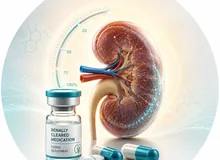
Milrinone is renally cleared — it accumulates in CKD/AKI; reduce the dose and monitor for hypotension and arrhythmia. This is the key nephrology caveat. Dopamine "renal-dose" (2–5 mcg/kg/min) does NOT protect the kidney or prevent AKI (KDIGO recommends against it).
Agent-specific points
Vasopressin in septic shock is given as a fixed 0.03 units/min, not titrated to effect; it is added to (not replacing) norepinephrine. For weight-based agents, use actual body weight unless local protocol specifies adjusted weight.
Why Use It
Dose-to-rate conversion errors are a recognized source of critical-care medication harm. A calculator pinned to the locally stocked ampoule reduces mental-math mistakes during resuscitation.
Vasopressor & Inotrope Infusion — Dose ↔ Rate
Select the agent, confirm the formulation in stock and the patient weight, then enter either a desired dose or an infusion rate. Both directions update automatically.
⚕ Doses and local formulations are educational defaults — always verify the actual ampoule concentration in stock and your institution's protocol before preparing any infusion. References: Surviving Sepsis Campaign 2021; KDIGO AKI 2012.
Next Steps
Use the computed rate or dose to set, verify, and titrate the infusion.
- Titrate to the hemodynamic target (e.g. MAP ≥ 65 mmHg) per protocol; recheck the dose after every bag change.
- If escalating norepinephrine beyond ~0.5 mcg/kg/min, consider adding vasopressin and searching for reversible causes.
- In AKI/CKD on milrinone, reassess the dose with kidney function.
Evidence & References
Default local formulations
| Agent | Standard local ampoule | Usual range |
|---|---|---|
| Norepinephrine (weight-based) | 4 mg / 4 mL (1 mg/mL) | 0.01–0.5 mcg/kg/min (max ≈ 1.0) |
| Norepinephrine (fixed) | 4 mg / 4 mL (1 mg/mL) | 1–30 mcg/min (max ≈ 90) |
| Epinephrine | 1 mg/mL (1:1,000) | 0.01–0.5 mcg/kg/min (max ≈ 1.0) |
| Dopamine | 200 mg / 5 mL (40 mg/mL) | 2–20 mcg/kg/min |
| Dobutamine | 250 mg / 20 mL (12.5 mg/mL) | 2–20 mcg/kg/min (max ≈ 40) |
| Phenylephrine | 10 mg/mL | 0.5–6 mcg/kg/min (max ≈ 9) |
| Vasopressin | 20 units/mL | 0.01–0.04 units/min (fixed 0.03) |
| Milrinone | 10 mg / 10 mL (1 mg/mL) | 0.125–0.75 mcg/kg/min — renally cleared |
Defaults are editable. Local stock concentrations vary — always confirm against the vial in hand. Dopamine bands: 2–5 dopaminergic (no renal benefit), 5–10 β-adrenergic, >10 α-adrenergic.
References
- Evans L, Rhodes A, Alhazzani W, et al. Surviving Sepsis Campaign: International Guidelines for Management of Sepsis and Septic Shock 2021. Crit Care Med. 2021;49(11):e1063–e1143.
- Kidney Disease: Improving Global Outcomes (KDIGO) AKI Work Group. KDIGO Clinical Practice Guideline for Acute Kidney Injury. Kidney Int Suppl. 2012;2(1):1–138. (recommends against low-dose dopamine for AKI)