- In each row, pick a food from the dropdown and enter the number of servings eaten in a typical day. The serving size is shown in the option text.
- Foods are grouped by category and tagged as animal, plant, or ADDITIVE (inorganic phosphate). Leave any row blank to count it as zero — empty rows never add to the total.
- The total dietary phosphorus (mg/day) updates live and is colour-banded against the CKD target: green <800, amber 800–1200, red >1200 mg/day.
- Watch the additive flag: any additive-tagged food triggers a strong warning because inorganic phosphate is ~90–100% absorbed, versus ~40–60% (animal) and ~20–40% (plant) for natural food phosphorus.
- Use the verdict and action text to guide label-reading, binder timing, and food swaps toward a lower phosphate-to-protein ratio.
Per-serving phosphorus values are representative estimates (FNRI Philippine food composition tables and standard references) and vary by brand, cut, and preparation. All computation runs in your browser; no values are stored or transmitted.
When to Use
Use this estimator to give patients with CKD or on dialysis a tangible sense of where their dietary phosphorus comes from and how it compares to the usual target of 800–1000 mg/day. It is a teaching and counselling aid — a way to translate "eat less phosphorus" into specific Filipino foods and serving counts — and to make the single most important point in modern phosphate management visible: not all phosphorus is equal. The fraction absorbed depends on the source, so the additive-tagged items deserve disproportionate attention.
Appropriate use
Adults with CKD (any stage) or on dialysis who need dietary phosphorus counselling; clinic or renal-dietitian education sessions; demonstrating the outsized impact of colas, processed and canned meats, and instant noodles. Pair it with a real diet history and serum phosphate trend.
When NOT to rely on it
This is an estimate, not a validated nutrient analysis. It does not replace a renal dietitian, a food diary, or laboratory monitoring of serum phosphate. Per-serving values are approximate and absorption is highly variable. Do not use the milligram total alone to set a binder dose — match binders to actual phosphate intake and serum levels under clinical supervision.
Pearls & Pitfalls
Inorganic / additive phosphorus is the real enemy
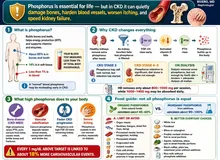
Phosphoric acid in dark colas and the phosphate preservatives in hotdogs, longganisa, canned/processed meat, and instant-noodle seasoning are inorganic salts that are ~90–100% absorbed — versus ~40–60% for animal-food phosphorus and only ~20–40% for plant phosphorus (much of which is bound as phytate). The same milligram count from an additive raises serum phosphate far more. Teach patients to read ingredient lists for any word containing "PHOS" (e.g. sodium phosphate, phosphoric acid, polyphosphates).
Favour a low phosphate-to-protein ratio
Because protein is essential — especially in dialysis — the goal is not zero phosphorus but the most protein per milligram of phosphate. Egg white, fresh fish, and lean fresh meats have a favourable P:protein ratio; processed meats, organ meats, hard cheese, and additive-laden foods are the opposite. Prioritise fresh, home-cooked food over processed equivalents.
Binders work on what you eat, when you eat it
Phosphate binders must be taken with meals to chelate dietary phosphate in the gut. Even good binder adherence is undermined by a high additive load, and cooking method matters — boiling and discarding the water (e.g. for meats and monggo) leaches out a meaningful fraction of phosphorus.
Why Use It
Hyperphosphatemia in CKD drives secondary hyperparathyroidism, vascular and soft-tissue calcification, bone disease, and is independently associated with cardiovascular mortality. KDIGO recommends limiting dietary phosphate and, in particular, preferentially restricting inorganic/additive sources — yet patients rarely know which foods these are. Putting Filipino foods, serving counts, a running total, and an absorption-aware warning in one place makes the abstract target concrete and surfaces the additive sources that label-reading alone often misses.
Phosphorus Dietary Load Estimator — Common Filipino Foods
Pick foods and the number of servings eaten in a typical day. The total dietary phosphorus updates live and is compared to the CKD target of 800–1000 mg/day. Additive-tagged foods trigger an absorption warning because inorganic phosphate is almost completely absorbed.
Tag key: Animal ~40–60% absorbed · Plant ~20–40% absorbed · ADDITIVE (inorganic) ~90–100% absorbed.
⚕ Total dietary phosphorus = Σ (servings × phosphorus mg per serving). CKD dietary phosphorus target ≈ 800–1000 mg/day; bands: green <800, amber 800–1200, red >1200 mg/day. Absorbed fraction differs by source: organic animal ~40–60%, organic plant ~20–40%, inorganic/additive ~90–100%. Per-serving values are estimates only and vary by brand and preparation. Source: KDIGO 2017 CKD-MBD Update (Kidney Int Suppl 2017;7:1–59); Kalantar-Zadeh K et al. Clin J Am Soc Nephrol. 2010;5(3):519–530; FNRI Philippine food composition tables.
Next Steps
Use the estimate to drive practical counselling, not to set a binder dose by itself.
- If any additive items are flagged, target them first — swap colas for water/clear soda and processed/canned meats and instant noodles for fresh, home-cooked equivalents.
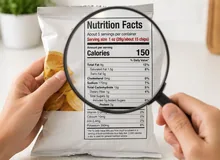
- Teach label-reading: scan ingredient lists for any word containing "PHOS" (sodium phosphate, phosphoric acid, polyphosphates) — these are not always reflected in the printed phosphorus number.
- Reinforce taking phosphate binders with every meal and snack, and consider boiling-and-draining for meats and legumes to lower phosphorus.
- Favour foods with a low phosphate-to-protein ratio (egg white, fresh fish, lean fresh meat) to preserve protein intake — important on dialysis.
- Confirm against the serum phosphate trend and refer to a renal dietitian for a full assessment when intake is high or phosphate is uncontrolled.
Evidence & References
Calculation
| Quantity | Definition |
|---|---|
| Total dietary phosphorus (mg/day) | Σ (servings × phosphorus mg per serving) across all chosen foods |
| CKD dietary target | ≈ 800–1000 mg/day (individualised; lower in advanced CKD / dialysis per dietitian) |
| Colour bands | Green <800 · Amber 800–1200 · Red >1200 mg/day |
| Absorbed fraction by source | Organic animal ~40–60% · Organic plant ~20–40% · Inorganic / additive ~90–100% |
Representative phosphorus values (per serving)
| Food (typical serving) | P (mg) | Source tag |
|---|---|---|
| Dilis — dried anchovies (30 g) | ~410 | Animal |
| Tuyo / daing — dried fish (1 pc) | ~250 | Animal |
| Sardinas — canned (½ can) | ~250 | Animal |
| Gatas — milk (1 cup) | ~230 | Animal |
| Bangus — milkfish (100 g) | ~200 | Animal |
| Pork / Beef (100 g) | ~200 | Animal |
| Monggo — mung beans (1 cup cooked) | ~200 | Plant |
| Chicken (100 g) | ~180 | Animal |
| Tilapia (100 g) | ~170 | Animal |
| Taho (1 cup) | ~150 | Plant |
| Itlog na maalat — salted egg (1) | ~130 | Animal |
| Keso — cheese (1 slice) | ~130 | Animal |
| Peanuts / mani (30 g) | ~110 | Plant |
| Itlog — egg (1 whole) | ~95 | Animal |
| Kanin — white rice (1 cup) | ~70 | Plant |
| Tinapay / pandesal (1 pc) | ~30 | Plant |
| Hotdog — processed (2 pc) | ~150 | ADDITIVE |
| Longganisa — processed (2 pc) | ~130 | ADDITIVE |
| Instant noodles (1 pack) | ~120 | ADDITIVE |
| Fast-food fried chicken (1 pc, additive-enhanced) | ~110 | ADDITIVE |
| Chicharon (30 g) | ~80 | ADDITIVE |
| Softdrink / cola (330 mL, phosphoric acid) | ~55 | ADDITIVE |
Values are representative estimates; brand, cut, and preparation cause wide variation. Additive items carry inorganic phosphate that is ~90–100% absorbed, so their physiological impact exceeds the printed milligram figure.
Evidence & References
KDIGO recommends limiting dietary phosphate intake to control hyperphosphatemia in CKD and suggests considering the phosphate source, preferentially limiting phosphate from inorganic (additive) sources. The Kalantar-Zadeh review details how additive phosphorus is far more bioavailable than naturally occurring organic phosphorus and why this matters clinically. Filipino food nutrient values draw on the FNRI Philippine food composition tables.
- Kidney Disease: Improving Global Outcomes (KDIGO) CKD-MBD Update Work Group. KDIGO 2017 Clinical Practice Guideline Update for the Diagnosis, Evaluation, Prevention, and Treatment of Chronic Kidney Disease–Mineral and Bone Disorder (CKD-MBD). Kidney Int Suppl. 2017;7(1):1–59.
- Kalantar-Zadeh K, Gutekunst L, Mehrotra R, et al. Understanding sources of dietary phosphorus in the treatment of patients with chronic kidney disease. Clin J Am Soc Nephrol. 2010;5(3):519–530.
- Food and Nutrition Research Institute (FNRI-DOST). Philippine Food Composition Tables. (General source for Filipino food nutrient values.)