- Select the age category — preterm, term neonate (0–10 d), infant (10 d – 2 y), child (2–12 y), or adolescent (12–18 y). Each carries its own reference range for total calcium.
- Enter the total serum calcium in mg/dL or mmol/L (use the unit toggle; conversion factor is mg/dL × 0.2495 = mmol/L).
- Optionally enter serum albumin (g/dL or g/L) — needed to compute the Payne albumin-corrected total Ca. If omitted, the tool reports the uncorrected total Ca only.
- Optionally enter the arterial pH — alkalosis decreases ionized Ca (~0.05 mmol/L per 0.1 rise in pH above 7.40), which the tool applies to the ionized-Ca estimate.
- The interpretation classifies corrected Ca vs the age-band: severe / mild hypocalcemia, normal, or mild / severe hypercalcemia. A directly measured ionized Ca is preferred whenever feasible.
All computation runs in your browser; no values are stored or transmitted.
When to Use
Use this calculator in any pediatric patient with an abnormal total calcium on chemistry, particularly when serum albumin is low or unknown, when symptoms suggest hypocalcemia (tetany, perioral or peripheral paresthesias, seizures, prolonged QTc, Trousseau or Chvostek sign) or hypercalcemia (polyuria, dehydration, constipation, altered mental status), and when a direct ionized calcium measurement is unavailable. It is especially useful in CKD-MBD, nephrotic syndrome, malnutrition, post-thyroidectomy/parathyroidectomy, the critically ill child, and during evaluation of neonatal hypocalcemia.
Appropriate population
Neonates, infants, children, and adolescents 0–18 years — including preterm infants — in whom total calcium needs to be interpreted against an age-specific reference range, and in whom hypoalbuminemia makes the uncorrected value misleading. Useful for inpatient, ICU, ward, and outpatient pediatric nephrology / endocrinology workflows.
When NOT to rely on it
The 0.8-per-g/dL Payne correction was derived in adults and is known to overcorrect or undercorrect in many pediatric populations — particularly preterm neonates, CKD, multiple myeloma–physiology states, and the critically ill. When the clinical decision turns on a precise calcium (severe symptomatic hypo- or hypercalcemia, citrate-anticoagulated dialysis or transfusion, profound acid–base derangement), a directly measured ionized calcium is the standard of care. The ionized-Ca estimate here is a rough screen — never a substitute for the measured value.
Pearls & Pitfalls
Age-specific ranges matter
Pediatric total calcium is not a single number. Preterm neonates run lower (6.0–10.0 mg/dL), term neonates 7.6–10.4, infants and children 8.8–11.0, and adolescents settle to a near-adult 8.4–10.2. A "low" calcium in an adolescent may be entirely normal in a term newborn — always classify against the correct age band, which this tool does automatically.
pH and ionized Ca
Acid–base status shifts the equilibrium between bound and ionized calcium: alkalosis increases binding to albumin and decreases ionized Ca (~0.05 mmol/L for every 0.1 increase in pH above 7.40) — a classic cause of post-hyperventilation tetany. Acidosis does the opposite. The estimate here applies that adjustment when a pH is entered, but in real critical illness (lactic acidosis, sepsis, citrate from transfusion) measure the ionized Ca.
Pitfalls
(1) Spurious hypocalcemia from EDTA tube contamination, a poorly drawn sample, or lipemia. (2) Spurious hypercalcemia from prolonged tourniquet, dehydration, or hemoconcentration. (3) The Payne correction was derived in adults and may mis-classify pediatric patients — favor the measured ionized Ca when the decision is critical. (4) In CKD-MBD, the calcium target shifts with PTH, phosphate, vitamin D, and dialysate composition — interpret with the full mineral panel, not in isolation. (5) Hereditary FHH (familial hypocalciuric hypercalcemia) presents with mild hypercalcemia and inappropriately normal/low urinary Ca — do not over-treat.
Why Use It
The physiologically active form of calcium is the ionized fraction — about half of circulating calcium — and that fraction depends on serum albumin, pH, and binding to anions such as phosphate and citrate. In children, where albumin levels are often low (nephrotic syndrome, malnutrition, hepatic disease, CKD), a total calcium can look reassuring while the patient is symptomatically hypocalcemic, or look alarmingly low while the ionized calcium is fine. Adjusting for albumin (Payne) and screening the ionized fraction lets the clinician decide quickly whether the abnormal total calcium is real, and the age-band classification turns a context-free number into an actionable verdict for a preterm neonate, an infant, a child, or an adolescent. Even with its acknowledged limits, this calculation remains the de facto bedside standard wherever a true ionized Ca is not available.
Pediatric Calcium — Albumin-Corrected & Ionized Ca Estimate
Enter the patient's age category, total serum calcium, and (when available) serum albumin and arterial pH. The tool reports the albumin-corrected total Ca, an estimated ionized Ca (with pH adjustment), and a classification against the age-specific reference range. If albumin is missing, the uncorrected total Ca is reported.
⚕ Payne RB, Little AJ, Williams RB, Milner JR. Br Med J. 1973;4(5893):643–646. The 0.8-per-g/dL albumin correction was derived in adults and may mis-classify pediatric patients. Ionized Ca shown here is a rough screening estimate; a directly measured ionized Ca is the physiologic standard and should be obtained whenever the clinical decision turns on a precise value (severe symptomatic hypo-/hypercalcemia, citrate anticoagulation, transfusion, marked acid–base derangement). For licensed clinicians; not a substitute for individualized assessment.
Next Steps
Let the category-vs-age verdict direct the next move, and confirm with a measured ionized Ca when the decision matters.
- Severe hypocalcemia (corrected Ca >1 mg/dL below the age-band lower bound, or symptoms — tetany, seizure, prolonged QTc): obtain a measured ionized Ca, check magnesium, phosphate, PTH, and 25-OH vitamin D, give IV calcium gluconate per pediatric weight-based protocol on a monitor, and treat magnesium deficiency.
- Mild hypocalcemia: confirm with repeat sampling, complete the mineral panel (Mg, PO₄, PTH, 25-OH vit D, alkaline phosphatase), screen for CKD-MBD, and consider oral calcium / vitamin D replacement.
- Hypercalcemia (mild or severe): rehydrate (isotonic saline at maintenance + deficit per body weight), screen PTH, PTHrP, 25-OH vit D, 1,25-OH₂ vit D, phosphate, urine Ca:Cr ratio (FHH), and investigate for immobilization, granulomatous disease, malignancy, or hypervitaminosis D.
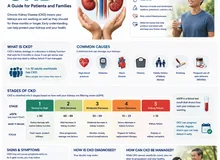
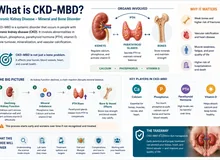
- In CKD-MBD: interpret with PTH, phosphate, vitamin D status, and dialysate calcium; align targets with the KDIGO CKD-MBD framework.
- For adult patients, use the Adult Corrected Calcium calculator. For complete electrolyte / acid-base context see the calculators index.
Evidence & References
Formulas
| Quantity | Formula |
|---|---|
| Albumin-corrected total Ca (mg/dL) | measured Ca + 0.8 × (4.0 − albumin g/dL) (Payne) |
| Total Ca unit conversion | mg/dL × 0.2495 = mmol/L |
| Estimated ionized Ca (mmol/L) | ≈ corrected total Ca (mmol/L) × 0.5 (pragmatic screen) |
| pH adjustment | iCa decreases ~0.05 mmol/L per 0.1 rise in pH above 7.40 |
| Ionized Ca unit conversion | mmol/L × 4.008 = mg/dL |
Age-Specific Total Calcium Reference Ranges
| Age band | Total Ca (mg/dL) | Total Ca (mmol/L) |
|---|---|---|
| Preterm neonate | 6.0 – 10.0 | 1.50 – 2.50 |
| Term neonate (0–10 days) | 7.6 – 10.4 | 1.90 – 2.59 |
| Infant (10 days – 2 years) | 9.0 – 11.0 | 2.24 – 2.74 |
| Child (2–12 years) | 8.8 – 10.8 | 2.20 – 2.69 |
| Adolescent (12–18 years) | 8.4 – 10.2 | 2.10 – 2.54 |
| Ionized Ca (most ages) | 4.4 – 5.3 | 1.10 – 1.32 |
Severity
| Result vs age band | Interpretation |
|---|---|
| Within range | Normal calcium for age |
| Below lower bound, by ≤1 mg/dL | Mild hypocalcemia |
| >1 mg/dL below lower bound | Severe hypocalcemia — risk of tetany, seizure, prolonged QTc |
| Above upper bound, <12 mg/dL | Mild hypercalcemia |
| ≥ 12 mg/dL or symptomatic | Severe hypercalcemia — rehydrate, investigate cause urgently |
The Payne formula was derived in adults; pediatric-specific coefficients have been debated. Where the decision turns on a precise value, a directly measured ionized calcium is preferred.
References
- Payne RB, Little AJ, Williams RB, Milner JR. Interpretation of serum calcium in patients with abnormal serum proteins. Br Med J. 1973;4(5893):643–646. doi:10.1136/bmj.4.5893.643.
- Greenbaum LA. Calcium and phosphate metabolism. In: Kliegman RM et al., eds. Nelson Textbook of Pediatrics. 21st ed. Philadelphia: Elsevier; 2020.
- Kidney Disease: Improving Global Outcomes (KDIGO) CKD-MBD Update Work Group. KDIGO 2017 Clinical Practice Guideline Update for the Diagnosis, Evaluation, Prevention, and Treatment of Chronic Kidney Disease–Mineral and Bone Disorder (CKD-MBD). Kidney Int Suppl. 2017;7(1):1–59.