- For each food row, pick a food from the dropdown and enter the number of servings eaten in a typical day. The serving size shown in each option is fixed (e.g. 1 cup, 1 piece).
- Add as many of the eight rows as you need; leave unused rows blank — blank rows contribute 0.
- Toggle “Hyperkalemia-prone” on for patients with recurrent high serum potassium, advanced CKD, or on RAAS inhibitors — this tightens the target.
- The result shows total potassium in mg/day, how it compares to the target band, the top contributing food, and tailored leaching / avoidance advice.
Values are representative estimates from FNRI Philippine food-composition data and standard nutrient tables; real potassium content varies with portion, ripeness, and preparation. All computation runs in your browser; no values are stored or transmitted.
When to Use
Use this estimator to give CKD or hyperkalemia-prone patients a concrete sense of where their daily dietary potassium sits, and to localize counseling to the Filipino diet (saging, kamote, gabi, monggo, buko juice). It turns an abstract “eat less potassium” into a ranked list of the patient’s own biggest contributors, and pairs that with practical leaching advice — making it useful for diet teaching, dietitian referral prep, and shared decision-making.
Appropriate population
Adults with CKD (especially advanced CKD), recurrent or borderline hyperkalemia, or those on potassium-raising drugs (ACE inhibitors, ARBs, MRAs, potassium-sparing diuretics) who need diet counseling. It is an estimate of dietary intake, not of serum potassium.
When NOT to rely on it
This is not a serum-potassium predictor and does not replace a basic metabolic panel. The mg-per-serving figures are population averages — actual content varies with portion, cultivar, ripeness, and cooking. Modern KDOQI guidance has moved away from blanket fruit-and-vegetable restriction toward individualized limits, so do not use a high total to justify removing nutritious whole foods without checking the patient’s serum potassium and overall diet quality. Always confirm management against the patient’s labs and a dietitian’s assessment.
Pearls & Pitfalls
Double-boil / leach high-potassium foods
Potassium is water-soluble. Peeling, dicing, soaking, then boiling root crops and vegetables in a large volume of water — and discarding the water — can cut potassium by roughly 50%. This “double-boil” or leaching technique lets patients keep gabi, kamote, patatas, and kalabasa in the diet at a lower potassium cost. Steaming and microwaving do not leach as effectively.
Target the biggest contributors
Don’t restrict everything — restrict what counts. Buko juice (coconut water), gabi/taro, monggo, potato, and tomato carry far more potassium per serving than rice or bread. The calculator surfaces the single top contributor so counseling can focus there. Coconut water and salt-free “low-sodium” products that swap in potassium chloride are common hidden loads.
Pitfalls
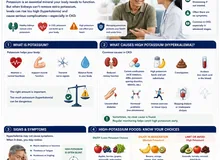
(1) KCl salt substitutes are dangerous in CKD — “low-sodium salt” is often potassium chloride and can precipitate hyperkalemia. (2) Diet is one lever only: metabolic acidosis, constipation, RAAS inhibitors, tissue breakdown, and missed dialysis raise serum potassium independent of intake. (3) These are average mg-per-serving values, not the patient’s exact intake. (4) A high dietary total does not by itself justify cutting nutritious whole foods — individualize against serum potassium and overall diet quality.
Why Use It
Generic potassium counseling (“avoid bananas”) rarely changes behavior, and English-language food lists miss the staples Filipino patients actually eat. Quantifying a day in familiar foods makes the message concrete: a patient who sees that one cup of buko juice plus gabi and monggo already exceeds the target understands the problem far better than from a printed list. Linking each contributor to a leaching technique keeps the diet nutritious — the modern KDOQI position favors individualized limits over blanket fruit-and-vegetable restriction, since whole foods carry fiber and alkali that themselves help control potassium and acidosis.
Potassium Dietary Load Estimator — Filipino Foods
For each row, choose a food and enter how many servings are eaten in a typical day. The total updates live. Leave unused rows blank. Toggle “Hyperkalemia-prone” to tighten the target for high-risk patients.
⚕ Total potassium (mg/day) = Σ (potassium per serving × servings) across all rows. Targets: general CKD <3000 mg/day; hyperkalemia-prone <2000 mg/day (bands: green safe / amber caution / red high). Per-serving values are representative population estimates (FNRI Philippine food-composition tables and standard nutrient databases) and vary with portion, cultivar, ripeness, and cooking; double-boiling/leaching can roughly halve the potassium of root crops and vegetables. This estimates dietary intake, not serum potassium. Source: KDOQI Clinical Practice Guideline for Nutrition in CKD: 2020 Update. Am J Kidney Dis. 2020;76(3 Suppl 1):S1–S107.
Next Steps
Use the estimate to guide — not replace — counseling and lab-based management.
- Target the top contributor first: substitute or reduce it, or teach double-boiling/leaching (discard the water) for root crops and vegetables to cut their potassium by up to half.
- Stop coconut water/buko juice and any KCl-based “low-sodium” salt substitute in CKD or hyperkalemia-prone patients.
- Check serum potassium and the basic metabolic panel; correct metabolic acidosis and constipation, and review RAAS-inhibitor / MRA dosing — diet is only one lever.
- For dialysis patients, reinforce session adherence; for advanced CKD, consider a dietitian referral and individualize limits rather than blanket-restricting nutritious foods.
Evidence & References
Calculation & target bands
| Quantity | Definition |
|---|---|
| Total potassium (mg/day) | Σ (potassium per serving × servings) over all rows; blank rows count as 0 |
| General CKD target | < ~3000 mg/day (≈ 2000–3000 mg/day individualized range) |
| Hyperkalemia-prone target | < 2000 mg/day |
| Color bands | green < 2000 · amber 2000–3000 · red > 3000 (vs the active target) |
| Leaching effect | Double-boil/soak + discard water ≈ up to 50% reduction (root crops, vegetables) |
Representative Filipino food potassium (per typical serving)
| Food | Serving | K (mg) | Group |
|---|---|---|---|
| Gabi / taro | 1 cup | ~600 | High |
| Buko juice / coconut water | 1 cup | ~600 | High |
| Patatas / potato | 1 cup | ~600 | High |
| Monggo / mung beans | 1 cup | ~530 | High |
| Kamote / sweet potato | 1 cup | ~450 | High |
| Saging / banana (saba) | 1 pc | ~400 | High |
| Kamatis / tomato | 1 cup | ~400 | High |
| Gatas / milk | 1 cup | ~380 | High |
| Avocado | ½ pc | ~350 | High |
| Kalabasa / squash | 1 cup | ~350 | High |
| Gata / coconut milk | ½ cup | ~315 | High |
| Malunggay leaves | 1 cup | ~300 | High |
| Saluyot / alugbati | 1 cup | ~300 | High |
| Tsokolate / chocolate | 30 g | ~210 | Medium |
| Dalandan / orange | 1 pc | ~240 | Medium |
| Apple | 1 pc | ~150 | Medium |
| Repolyo / cabbage | 1 cup | ~150 | Medium |
| Dilis / dried fish | 30 g | ~150 | Medium |
| Tuyo / dried salted fish | 30 g | ~130 | Medium |
| Coffee (brewed) | 1 cup | ~115 | Medium |
| Pipino / cucumber | 1 cup | ~150 | Low–Med |
| Egg | 1 pc | ~70 | Low |
| Kanin / white rice | 1 cup | ~55 | Low |
| Pandesal / white bread | 1 pc | ~35 | Low |
Values are representative population estimates (FNRI Philippine Food Composition Tables and standard nutrient databases) and vary with portion, cultivar, ripeness, and cooking. They estimate dietary intake, not serum potassium; cooking by leaching can substantially lower the figures above.
Evidence & References
The 2020 KDOQI nutrition update individualizes dietary potassium to serum levels and overall diet rather than imposing a uniform cap, and recent commentary cautions against blanket fruit-and-vegetable restriction — whole plant foods supply fiber and alkali that can themselves aid potassium and acid-base balance. Practical management couples diet with attention to acidosis, constipation, RAAS-inhibitor dosing, and dialysis adequacy. Potassium-chloride “salt substitutes,” widely marketed as low-sodium, are a recognized hazard in CKD.
- Ikizler TA, Burrowes JD, Byham-Gray LD, et al. KDOQI Clinical Practice Guideline for Nutrition in CKD: 2020 Update. Am J Kidney Dis. 2020;76(3 Suppl 1):S1–S107.
- Food and Nutrition Research Institute (FNRI-DOST). Philippine Food Composition Tables. Department of Science and Technology, Philippines.
- Kidney Disease: Improving Global Outcomes (KDIGO) CKD Work Group. KDIGO 2024 Clinical Practice Guideline for the Evaluation and Management of Chronic Kidney Disease. Kidney Int. 2024;105(4S):S117–S314.
- Clase CM, Carrero JJ, Ellison DH, et al. Potassium homeostasis and management of dyskalemia in kidney diseases: conclusions from a KDIGO Controversies Conference. Kidney Int. 2020;97(1):42–61.