- Enter the patient's weight (kg) and age (years).
- Select the indication (primary hypothyroidism, subclinical, post-thyroidectomy, or DTC TSH suppression).
- Check cardiac disease or age ≥60 if applicable — this overrides the weight-based dose with a low starting dose.
- Check obesity (use IBW) if the patient is obese; enter height and sex to compute ideal body weight for dosing.
- The starting dose range updates automatically. Round to the nearest 25 µg tablet increment.
All computation runs in your browser; no values are stored or transmitted.
When to Use
Use this calculator when initiating levothyroxine (LT4) in newly diagnosed hypothyroidism, after total or near-total thyroidectomy, or when calculating TSH-suppressive doses in differentiated thyroid cancer (DTC). Also useful when recalculating dose after significant weight change (>10% body weight).
Appropriate uses
- Initiating LT4 in newly diagnosed primary hypothyroidism
- Post-thyroidectomy full replacement dosing
- TSH suppression after thyroid ablation for differentiated thyroid cancer (low-risk or high-risk)
- Dose recalculation after significant weight change
- Subclinical hypothyroidism where treatment is indicated (ATA recommends treatment in most patients)
Special considerations
- Pregnancy: LT4 requirement increases 30–50% — use specialist-guided dosing, recheck TSH every trimester
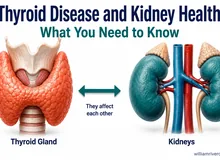
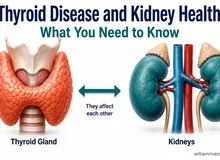
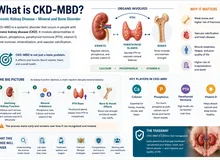
- CKD/ESRD: Dose adjustment for eGFR is generally NOT needed; LT4 is protein-bound and largely non-dialyzable. However, hypothyroidism is more prevalent in ESRD and TSH may be falsely low in sick euthyroid syndrome
- Malabsorption: PPI use, celiac disease, inflammatory bowel disease reduce LT4 absorption — higher doses may be needed
- Drug interactions: Calcium carbonate, iron, cholestyramine, and proton pump inhibitors reduce absorption; separate by ≥4 hours
Pearls & Pitfalls
Dosing pearls
- Use ideal body weight (IBW) in obese patients — actual weight overestimates required dose
- Take LT4 on an empty stomach, 30–60 minutes before food or coffee, for optimal absorption
- Recheck TSH + free T4 in 6–8 weeks after starting or any dose change
- Standard target TSH: 0.5–4.0 mIU/L for most hypothyroidism; 0.1–0.5 for low-risk DTC; <0.1 for high-risk DTC
- Biotin supplementation can falsely alter TSH and free T4 assays — hold for 48–72 hours before thyroid function testing
Pitfalls to avoid
- Do NOT use actual weight in obese patients — use IBW; actual weight leads to supratherapeutic dosing
- Do NOT start at full weight-based dose in elderly (≥60) or cardiac patients — risk of precipitating arrhythmia or angina; always start low and titrate slowly
- Avoid abrupt large dose escalations — increase by 12.5–25 µg increments every 6–8 weeks
- TSH may not reliably reflect tissue thyroid status in severe illness (sick euthyroid syndrome) — do not use LT4 dosing based on TSH alone in hospitalized critically ill patients
Why Use It
Fixed empirical starting doses (e.g., "start everyone on 50 µg") ignore the strong correlation between body weight and LT4 requirement. Weight-based dosing — 1.6–1.8 µg/kg/day of actual body weight (or IBW if obese) — provides a personalized starting estimate that reduces the number of dose adjustments needed before achieving euthyroidism, and minimizes the risk of prolonged over- or under-treatment at initiation. Age and cardiac adjustments further tailor the starting dose to the individual patient's cardiovascular risk tolerance.
Levothyroxine Weight-Based Dosing Calculator
Enter weight, age, and indication. Check modifiers as appropriate. The estimated starting dose range updates automatically.
Dose Modifiers
⚕ Calculated doses are starting estimates only. Individual LT4 dose must be titrated based on TSH and free T4 monitoring. Do not use in pregnancy without specialist input. For educational reference only. Reference: Jonklaas J, et al. ATA Guidelines. Thyroid. 2014;24(12):1670–1751; Garber JR, et al. AACE/ATA Guidelines. Endocr Pract. 2012;18(Suppl 2):1–207.
Next Steps
After calculating and prescribing the starting dose:
- Recheck TSH + free T4 in 6–8 weeks after starting or any dose change
- Adjust by 12.5–25 µg increments based on TSH response
- Target TSH: 0.5–4.0 mIU/L for most hypothyroidism; 0.1–0.5 for low-risk DTC; <0.1 for high-risk DTC
- Instruct patient to take LT4 on an empty stomach, 30–60 min before food or coffee
- Separate from calcium, iron, and phosphate binders by ≥4 hours
- In elderly and cardiac patients: increase dose slowly every 6–8 weeks; do not rush to full replacement
- In CKD/dialysis patients: dose adjustment for eGFR is generally not needed; monitor TSH as usual
- In pregnancy: recheck TSH every trimester; expect 30–50% dose increase requirement
Evidence & References
Dosing Reference Table
| Population / Indication | Starting Dose | TSH Target |
|---|---|---|
| Young healthy adult — full replacement | 1.6–1.8 µg/kg/day (actual or IBW) | 0.5–4.0 mIU/L |
| Subclinical hypothyroidism | 25–50 µg/day | 0.5–4.0 mIU/L |
| Age ≥60 or cardiac disease | 25–50 µg/day; titrate 12.5–25 µg q6–8 weeks | 0.5–4.0 mIU/L |
| Age ≥70 | 12.5–25 µg/day; titrate cautiously | 0.5–4.0 mIU/L |
| Post-thyroidectomy | 1.6–1.8 µg/kg/day | 0.5–4.0 mIU/L |
| DTC — low risk (post-ablation) | 1.6–2.0 µg/kg/day | 0.1–0.5 mIU/L |
| DTC — high risk | 2.0–2.2 µg/kg/day | <0.1 mIU/L |
| Pregnancy (existing Rx) | Increase by 30–50%; recheck TSH q trimester | 0.1–2.5 mIU/L (T1) |
References
- Jonklaas J, Bianco AC, Bauer AJ, et al. Guidelines for the Treatment of Hypothyroidism: Prepared by the American Thyroid Association Task Force on Thyroid Hormone Replacement. Thyroid. 2014;24(12):1670–1751. doi:10.1089/thy.2014.0028.
- Garber JR, Cobin RH, Gharib H, et al. Clinical practice guidelines for hypothyroidism in adults: cosponsored by the American Association of Clinical Endocrinologists and the American Thyroid Association. Endocr Pract. 2012;18(Suppl 2):1–207. doi:10.4158/EP12280.GL.
- Haugen BR, Alexander EK, Bible KC, et al. 2015 American Thyroid Association Management Guidelines for Adult Patients with Thyroid Nodules and Differentiated Thyroid Cancer. Thyroid. 2016;26(1):1–133.