- Select the height and weight units to match your records. Switching a unit clears that field.
- Enter age, select sex, and enter height and actual body weight. Height drives the Devine ideal body weight (IBW) used for dosing.
- Choose the diet strategy — VLPD (very-low-protein, 0.3–0.4 g/kg/day) + KA, or LPD (low-protein, 0.6 g/kg/day) ± KA.
- Choose the dosing weight (IBW is the default and is recommended) and the KA dose rate — standard Ketosteril (1 tablet per 5 kg/day) or a custom g/kg/day.
- The result shows KA tablets/day, a practical 3-times-daily schedule, and the paired dietary protein target. Confirm with a renal dietitian before prescribing.
All computation runs in your browser; no values are stored or transmitted.
When to Use
Use this tool to plan ketoacid/amino-acid analogue (KA; e.g. Ketosteril) dosing for a non-dialysis CKD patient placed on a protein-restricted diet, and to set the paired dietary protein target. KA supplements provide the nitrogen-free carbon skeletons of essential amino acids, letting the patient meet amino-acid needs on a very-low-protein diet (VLPD) without generating the nitrogenous waste that drives uremic symptoms. The supplement and the diet are inseparable: dosing KA without restricting dietary protein — or restricting protein without supplementing — defeats the purpose.
Appropriate population
Adults with non-dialysis CKD (typically stage 3b–5, eGFR < 45 and especially < 30 mL/min/1.73 m²) who are nutritionally stable, motivated, and able to follow a protein-restricted diet under dietitian supervision — used to slow progression and reduce uremic symptoms. A VLPD (0.3–0.4 g/kg/day) is supplemented with KA; an LPD (0.6 g/kg/day) may be used with or without KA. Dosing weight defaults to Devine ideal body weight.
When NOT to use it
Do not start KA/VLPD in malnourished patients or those with protein-energy wasting, poor intake, or active catabolic illness. KA salts contain calcium — contraindicated in hypercalcemia and in disordered amino-acid metabolism, and used cautiously with active vitamin D and calcium-based binders. Protein intake liberalizes once the patient starts maintenance dialysis, so this restricted-diet strategy no longer applies there. Adequate energy intake (30–35 kcal/kg/day) is mandatory to prevent catabolism.
Pearls & Pitfalls
Dose by ideal body weight, take with meals
Standard Ketosteril dosing is ~1 tablet per 5 kg body weight per day (≈0.1 g/kg/day; each tablet ≈0.63 g), computed on ideal — not actual — body weight to avoid over-dosing the obese patient. Divide the daily dose across meals (3, or 3–4, times daily), swallowing tablets whole during the meal so the amino-acid skeletons are used for protein synthesis rather than energy.
The diet is half the prescription
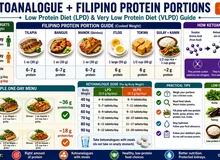
Pair every KA prescription with an explicit protein target: VLPD 0.3–0.4 g/kg/day or LPD 0.6 g/kg/day, with ~50% from high-biological-value sources (egg, dairy, fish, lean meat). Above all, ensure 30–35 kcal/kg/day of energy — an under-fed protein-restricted patient catabolizes their own muscle, the exact harm the strategy is meant to prevent.
Pitfalls
(1) Watch for protein-energy wasting — monitor weight, albumin/prealbumin, and nutritional status; stop if intake or status declines. (2) KA contains calcium salts — monitor serum calcium and watch for hypercalcemia, especially with active vitamin D or calcium-based binders; contraindicated in hypercalcemia. (3) Contraindicated in disturbed amino-acid metabolism. (4) Not for malnourished patients. (5) Requires close renal-dietitian supervision — this calculator informs, it does not replace that supervision.
Why Use It
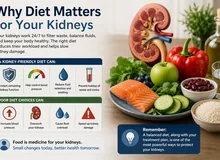
In non-dialysis CKD, a protein-restricted diet lowers the nitrogenous-waste and acid load on remaining nephrons, which can slow progression and reduce uremic symptoms (the KDOQI 2020 nutrition guideline supports protein restriction, with keto-analogue supplementation as an option for VLPD). Ketoanalogues let a patient go as low as 0.3–0.4 g protein/kg/day while still meeting essential amino-acid requirements, because the supplement supplies the carbon skeletons without the nitrogen. The trade-off is malnutrition risk: success depends on adequate calories, high-biological-value protein, and tight dietitian monitoring — exactly the parameters this calculator surfaces alongside the dose.
Ketoanalogue (KA) Supplement Dose Calculator
Enter age, sex, height, and weight to derive ideal body weight, choose a diet strategy and dose rate, and read the KA tablets per day, a 3-times-daily schedule, and the paired dietary protein target.
⚕ KA tablets/day = round(dosing weight ÷ 5) at the standard rate (≈0.1 g/kg/day; ~0.63 g/tablet); custom rate = round(g/kg/day × dosing weight ÷ 0.63). Dosing weight defaults to Devine IBW: men 50 + 2.3×(height in − 60); women 45.5 + 2.3×(height in − 60); Adjusted BW = IBW + 0.4×(actual − IBW). Dietary protein target (g/day) = protein g/kg/day × dosing weight. For non-dialysis CKD only; requires dietitian supervision and adequate energy (30–35 kcal/kg/day). Source: KDOQI 2020 Nutrition in CKD Update; Ketosteril prescribing information.
Next Steps
Use the result to support — not replace — a dietitian-led nutrition plan.
- Refer to a renal dietitian to build the diet around the protein target shown and confirm energy intake of 30–35 kcal/kg/day before starting.
- Aim for ~50% of dietary protein from high-biological-value sources (egg, dairy, fish, lean meat).
- Take KA tablets whole, with meals, on the schedule shown; keep total within the labelled maximum.
- Monitor body weight, albumin/prealbumin, and nutritional status for protein-energy wasting; monitor serum calcium given the calcium-salt content.
- Reassess at each visit; liberalize protein once the patient transitions to maintenance dialysis, and stop KA/VLPD if nutritional status declines.
Evidence & References
Formula & Equations
| Quantity | Equation |
|---|---|
| Ideal body weight — men (Devine) | 50 + 2.3 × (height in inches − 60) |
| Ideal body weight — women (Devine) | 45.5 + 2.3 × (height in inches − 60) |
| Adjusted body weight | IBW + 0.4 × (actual weight − IBW) |
| KA tablets/day (standard) | round(dosing weight in kg ÷ 5) (≈ 0.1 g/kg/day; ~0.63 g/tablet) |
| KA tablets/day (custom) | round(g/kg/day × dosing weight ÷ 0.63 g per tablet) |
| Dietary protein target (g/day) | protein g/kg/day × dosing weight in kg |
| SI conversion | weight (kg) = lb ÷ 2.2046; height (in) = cm ÷ 2.54 |
Diet strategies & protein targets
| Strategy | Protein | Ketoanalogue |
|---|---|---|
| VLPD + KA | 0.3–0.4 g/kg/day | Required — supplies essential amino-acid skeletons |
| LPD ± KA | 0.6 g/kg/day | Optional |
| Energy intake | 30–35 kcal/kg/day | Mandatory in both — prevents catabolism |
| High-biological-value protein | ~50% of total | Egg, dairy, fish, lean meat |
Ketosteril dosing is ~1 tablet per 5 kg body weight per day (≈0.1 g/kg/day; each tablet ≈0.63 g), divided across meals. KA salts contain calcium — monitor serum calcium. For non-dialysis CKD only; protein intake liberalizes on dialysis.
Evidence & References
The KDOQI 2020 Clinical Practice Guideline for Nutrition in CKD supports protein restriction in metabolically stable non-dialysis CKD, with keto-analogue/amino-acid-analogue supplementation as an option to allow a very-low-protein diet while preserving nutritional status. Standard Ketosteril dosing of 1 tablet per 5 kg body weight per day comes from its prescribing information. The strategy demands adequate energy intake and close monitoring for protein-energy wasting.
- Ikizler TA, Burrowes JD, Byham-Gray LD, et al. KDOQI Clinical Practice Guideline for Nutrition in CKD: 2020 Update. Am J Kidney Dis. 2020;76(3 Suppl 1):S1–S107.
- Mitch WE, Remuzzi G. Diets for patients with chronic kidney disease, should we reconsider? BMC Nephrol. 2016;17:80.
- Ketosteril (ketoanalogues of essential amino acids) prescribing information (1 tablet per 5 kg body weight per day).
- Devine BJ. Gentamicin Therapy. Drug Intell Clin Pharm. 1974;8(11):650–655.