- Choose Conventional (µg/dL) or SI (µmol/L) units to match your iron panel report.
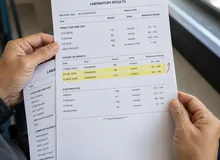
- Enter serum iron, TIBC, and ferritin from the same draw.
- Select the patient's dialysis status — TSAT and ferritin targets differ between hemodialysis, peritoneal dialysis, and non-dialysis CKD.
- Results update live: calculated TSAT, the ferritin value, and an iron-status classification (absolute deficiency, functional/iron-restricted deficiency, or iron-replete) — each with a colored badge and a plain-language interpretation and suggested action.
All computation runs in your browser; no values are stored or transmitted.
When to Use
Use this tool when interpreting an iron panel in a patient with CKD-related anemia — to compute transferrin saturation from serum iron and TIBC and to decide whether the picture is absolute iron deficiency, functional (iron-restricted) deficiency, or iron repletion. It is the calculation that precedes nearly every decision about oral iron, intravenous iron, or whether iron must be optimized before escalating an erythropoiesis-stimulating agent.
Appropriate population
Adults with CKD (dialysis or non-dialysis) being worked up or treated for anemia, with a recent serum iron, TIBC, and ferritin drawn together. Most useful when deciding between oral and intravenous iron, and when a normal or high ferritin coexists with a low TSAT — the hallmark of functional iron deficiency in CKD.
When NOT to rely on it
Ferritin is an acute-phase reactant — infection, inflammation, or malignancy can raise it independently of true iron stores, so a "normal" ferritin does not exclude deficiency during active inflammation. Serum iron and TSAT vary with recent iron intake, time of day, and fasting state; draw fasting and interpret trends, not single values. Do not give intravenous iron during active bacteremia. This is an educational aid, not a substitute for physician assessment.
Pearls & Pitfalls
Read TSAT and ferritin together
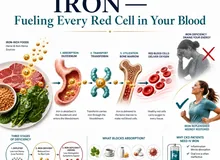
A low TSAT with a normal or high ferritin is the classic CKD picture of functional (iron-restricted) erythropoiesis — iron stores exist but cannot be mobilized fast enough. Such patients may still respond to iron, and iron should usually be optimized before escalating an ESA.
Iron before ESA escalation
When hemoglobin is below target, correct iron deficiency first: it is cheaper, safer, and often raises hemoglobin or lowers the ESA dose needed. In hemodialysis, intravenous iron is generally preferred over oral because gut absorption is poor and ongoing losses are high.
Pitfalls
(1) Ferritin is an acute-phase reactant — a "reassuring" value during infection or inflammation can mask true deficiency. (2) Do not give intravenous iron during active bacteremia. (3) Withhold iron when TSAT > 50% or ferritin > 500 ng/mL to avoid iron overload. (4) Serum iron and TSAT fluctuate with recent intake and time of day — draw fasting and follow the trend rather than acting on one value.
Why Use It
Iron deficiency is the most common and most correctable cause of anemia and of resistance to erythropoiesis-stimulating agents in CKD. Because the kidneys' anemia is often "iron-restricted" — adequate stores that cannot be mobilized fast enough for erythropoiesis — TSAT and ferritin must be read together: a low TSAT with normal or high ferritin signals functional deficiency that may still respond to iron, while a low TSAT with low ferritin signals absolute deficiency. Getting this classification right avoids both untreated deficiency and unnecessary iron loading, and ensures ESA dosing is not escalated when the real problem is iron.
Iron Status Calculator — TSAT & Iron Deficiency Classifier
Enter your iron panel results to calculate TSAT and determine your iron deficiency type. Your doctor uses this to decide whether IV iron, oral iron, or no iron therapy is appropriate for you.
⚕ TSAT = (Serum Iron ÷ TIBC) × 100. Ferritin is an acute phase reactant — elevated by inflammation, infection, or malignancy independent of iron stores. Classification per KDIGO 2024. This tool is for educational guidance only — iron therapy decisions require physician assessment.
Next Steps
Use the result to support — not replace — clinical judgment.
- Interpret the value against the targets shown in the calculator and the Evidence section below, in the context of the full clinical picture.
- Trend serial measurements rather than acting on a single result; confirm abnormal or unexpected values before changing management.
- Apply the relevant KDIGO / specialty-guideline threshold and document the indication.
- Escalate or refer to nephrology when results are out of range, rapidly changing, or discordant with the clinical picture — and discuss the implications with the patient.
Evidence & References
Formula & Equations
| Quantity | Equation |
|---|---|
| Transferrin saturation, TSAT (%) | (Serum iron ÷ TIBC) × 100 |
| Serum iron, SI → conventional (µg/dL) | µmol/L × 5.5866 |
| TIBC, SI → conventional (µg/dL) | µmol/L × 5.5866 |
KDIGO iron targets & classification
| Pattern | TSAT | Ferritin |
|---|---|---|
| Absolute iron deficiency | ≤ 20% | < 100 ng/mL (ND-CKD) / < 200 ng/mL (HD) |
| Functional (iron-restricted) deficiency | ≤ 20% | Normal or high (with low TSAT) |
| Iron-replete / target | > 20% (ND) / > 30% (HD) | > 100 ng/mL (ND) / > 200 ng/mL (HD) |
| Upper limits — withhold IV iron | > 50% | > 500 ng/mL |
A 2-week trial of IV iron is reasonable in adult CKD anemia when TSAT ≤ 30% and ferritin ≤ 500 ng/mL if an increase in hemoglobin or a decrease in ESA dose is desired. Ferritin should be interpreted in the context of inflammation (e.g., CRP), as it is an acute-phase reactant.
Evidence & References
The TSAT and ferritin thresholds and the iron-trial framing follow the KDIGO Clinical Practice Guideline for Anemia in CKD, which sets out when a trial of iron is appropriate and the TSAT/ferritin ceilings above which intravenous iron is generally withheld.
- Kidney Disease: Improving Global Outcomes (KDIGO) Anemia Work Group. KDIGO Clinical Practice Guideline for Anemia in Chronic Kidney Disease. Kidney Int Suppl. 2012;2(4):279–335.