- Work through the checkboxes top to bottom: adiposity, then metabolic risk factors, then CKD risk, then subclinical CVD, then clinical CVD.
- For CKD risk, either enter eGFR + albuminuria category to derive the KDIGO risk tier automatically, or tick the manual "moderate-to-high-risk CKD" / "very-high-risk CKD" boxes.
- If a clinical CVD event is present, indicate whether there is kidney failure / dialysis to split Stage 4 into 4a vs 4b.
- The tool evaluates from Stage 4 downward and returns the highest applicable stage — the defining criteria met and stage-specific management.
- Optional height + weight auto-computes BMI; ticking the Asian-cutoff box lowers the overweight/obesity and waist thresholds.
All logic runs in your browser; no values are stored or transmitted. This staging tool does not compute a 10-year CVD risk score — use the PREVENT equations separately and tick the corresponding box.
When to Use
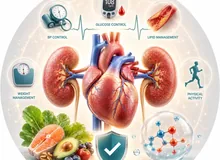
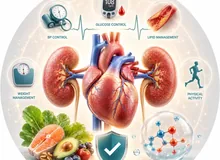
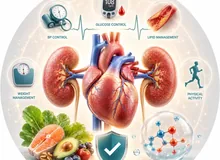
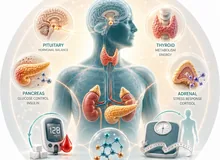
Use this tool to assign the Cardiovascular-Kidney-Metabolic (CKM) syndrome stage defined by the 2023 AHA Presidential Advisory. CKM syndrome describes the pathophysiologic overlap of adiposity/metabolic dysfunction, chronic kidney disease, and cardiovascular disease. Staging frames an individual on a continuum from Stage 0 (no risk factors) through Stage 4 (clinical CVD in the setting of CKM), which then anchors prevention intensity and therapy selection (lifestyle, SGLT2 inhibitors, GLP-1 receptor agonists, finerenone, statins, and guideline-directed CVD care).
Appropriate population
Adults being screened or risk-stratified for cardiovascular-kidney-metabolic disease — particularly those with overweight/obesity, hypertension, dyslipidemia, dysglycemia, or CKD. Staging is a framework for prevention and management planning, not a single-encounter diagnostic test; it should incorporate the full clinical picture, labs, and imaging where available.
What it does not do
This tool does not compute a quantitative 10-year CVD risk score — calculate that separately (e.g., the AHA PREVENT equations) and tick the "very-high predicted CVD risk" box if applicable. It does not replace echocardiography, coronary calcium scoring, or biomarkers for detecting subclinical CVD; those findings are entered as inputs. Stage assignment is the highest tier met, so a single qualifying clinical-CVD event places a patient at Stage 4 regardless of earlier criteria.
Pearls & Pitfalls
Highest stage wins
CKM stage is the highest tier a patient meets, not the sum of features. A patient with obesity, diabetes, CKD, and a prior MI is Stage 4 — staging upward stops at the most advanced qualifying criterion. Earlier-stage criteria still matter for management, but they do not change the stage label.
Use Asian-specific cutoffs
For Filipino and other Asian patients, lower the thresholds: overweight/obesity at BMI ≥23 (not ≥25) and abdominal obesity at waist ≥80 cm (women) / ≥90 cm (men). Using the default Western cutoffs systematically under-stages adiposity-driven risk in Asian populations — tick the Asian-cutoff box.
Stage 1 vs Stage 2 boundary
Stage 1 is excess/dysfunctional adiposity OR impaired glucose tolerance/prediabetes without other metabolic risk factors or CKD. The moment hypertension, hypertriglyceridemia, the metabolic syndrome, established diabetes, or moderate-to-high-risk CKD appears, the patient moves to Stage 2.
Pitfalls
(1) Stage 3 requires subclinical CVD or a risk equivalent in the presence of metabolic risk factors or CKD — not in isolation. (2) Stage 4 is split into 4a (no kidney failure) and 4b (kidney failure / on dialysis); do not omit the dialysis question. (3) This staging tool is not a 10-year risk calculator — compute predicted risk with PREVENT separately. (4) Stage assignment supports, but does not replace, individualized clinical judgment and guideline-directed care.
Why Use It
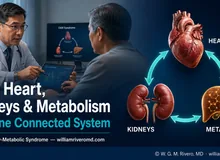
The CKM construct reframes cardiology, nephrology, and metabolic medicine as one connected disease process rather than separate silos. Staging makes the continuum explicit and operational: it identifies who needs primordial prevention (Stage 0), who needs aggressive lifestyle and weight management before hard outcomes appear (Stage 1), who warrants intensified metabolic, blood-pressure, and kidney-protective therapy including SGLT2 inhibitors, GLP-1 receptor agonists, and finerenone (Stage 2), who should be screened for and treated as having subclinical disease (Stage 3), and who needs full guideline-directed secondary prevention (Stage 4). Consistent staging also standardizes documentation, supports interdisciplinary referral, and aligns therapy with the AHA advisory's stage-based recommendations.
CKM Syndrome Staging Tool (AHA 2023)
Check every feature that applies. The tool evaluates from Stage 4 down and returns the highest applicable stage with its defining criteria and stage-specific management. CKD risk can be entered as eGFR + albuminuria (auto-derived KDIGO tier) or set manually below.
1 · Excess / dysfunctional adiposity & dysglycemia (Stage 1 features)
2 · Metabolic risk factors (Stage 2 features)
3 · Kidney risk (KDIGO heat-map tier)
4 · Subclinical CVD & risk equivalents (Stage 3 features)
5 · Clinical CVD (Stage 4 features)
⚕ CKM stage = highest tier met, evaluated from Stage 4 downward: Stage 4 (clinical CVD + CKM; 4b if kidney failure/dialysis, else 4a) → Stage 3 (subclinical CVD or risk equivalent with metabolic risk factors/CKD) → Stage 2 (metabolic risk factors or moderate-to-high-risk CKD) → Stage 1 (excess/dysfunctional adiposity or prediabetes only) → Stage 0 (none). Decision support only; verify against the source advisory and individualize care. Source: Ndumele CE, Rangaswami J, Chow SL, et al. Circulation. 2023;148(20):1606–1635.
Next Steps
Translate the stage into stage-specific management.
- Stage 0 — Primordial prevention: maintain healthy weight/waist, diet, physical activity, no tobacco; screen periodically for emerging risk factors.
- Stage 1 — Healthy lifestyle and intentional weight management (≥5% loss); treat prediabetes; consider a GLP-1 receptor agonist when obesity with prediabetes warrants pharmacotherapy.
- Stage 2 — Treat each metabolic risk factor to target (BP, lipids, glycemia); prioritize agents with cardiorenal benefit — SGLT2 inhibitors and/or GLP-1 receptor agonists in diabetes, finerenone in albuminuric diabetic CKD, statin per ASCVD risk; refer to nephrology for higher-risk CKD.
- Stage 3 — Intensify prevention toward secondary-prevention intensity: statin (consider higher intensity), maximize SGLT2 inhibitor / finerenone where indicated, address subclinical HF; calculate predicted CVD risk (PREVENT).
- Stage 4 — Full guideline-directed CVD therapy for the established condition (ASCVD, HF, AF), continued cardiorenal-metabolic protection, and coordinated cardiology–nephrology care; in 4b (kidney failure/dialysis), individualize therapy and involve nephrology.
- Re-stage as the clinical picture evolves and document the defining criteria.
Evidence & References
CKM stages (AHA 2023)
| Stage | Defining criteria |
|---|---|
| Stage 0 | No CKM risk factors — normal weight/waist, normal BP/lipids/glucose, no CKD, no CVD. Primordial prevention. |
| Stage 1 | Excess or dysfunctional adiposity (overweight/obesity, abdominal obesity) OR impaired glucose tolerance/prediabetes — without other metabolic risk factors or CKD. |
| Stage 2 | Metabolic risk factors (hypertriglyceridemia, hypertension, metabolic syndrome, diabetes) OR moderate-to-high-risk CKD. |
| Stage 3 | Subclinical CVD (subclinical atherosclerosis or HF) — or risk equivalent (very high predicted 10-yr CVD risk, or very-high-risk CKD) — in the presence of metabolic risk factors/CKD. |
| Stage 4 | Clinical CVD in CKM — ASCVD (CHD, stroke, PAD), HF, or AF with CKM risk factors. 4a without kidney failure; 4b with kidney failure / on dialysis. |
Threshold notes
| Parameter | Cutoff used |
|---|---|
| Overweight / obesity (BMI) | ≥25 kg/m² (≥23 kg/m² with Asian cutoffs) |
| Abdominal obesity (waist) | ≥88 cm women / ≥102 cm men (≥80 / ≥90 cm with Asian cutoffs) |
| KDIGO moderate–high risk | Heat-map yellow/orange — e.g. eGFR 45–59 with A2, or eGFR 30–44, or A3 |
| KDIGO very-high risk | Heat-map red — e.g. eGFR <30, or eGFR 30–44 with A3, etc. |
| Stage 4 subdivision | 4a = no kidney failure; 4b = kidney failure (incl. dialysis) |
The embedded eGFR/albuminuria logic approximates the KDIGO heat map; for borderline cells confirm against the full KDIGO risk matrix. This staging tool does not compute a quantitative predicted CVD risk — use the AHA PREVENT equations.
Evidence & References
The CKM staging framework was defined in the 2023 AHA Presidential Advisory, with a companion scientific statement addressing CKM-specific risk prediction. The staging concept operationalizes the overlap of metabolic dysfunction, CKD, and CVD into a continuum that anchors prevention intensity and therapy selection. Asian-specific anthropometric cutoffs reflect higher cardiometabolic risk at lower BMI/waist in Asian populations.
- Ndumele CE, Rangaswami J, Chow SL, et al. Cardiovascular-Kidney-Metabolic Health: A Presidential Advisory From the American Heart Association. Circulation. 2023;148(20):1606–1635.
- Ndumele CE, Neeland IJ, Tuttle KR, et al. A Synopsis of the Evidence for the Science and Clinical Management of Cardiovascular-Kidney-Metabolic (CKM) Syndrome: A Scientific Statement From the American Heart Association. Circulation. 2023;148(20):1636–1664.
- Kidney Disease: Improving Global Outcomes (KDIGO) CKD Work Group. KDIGO 2024 Clinical Practice Guideline for the Evaluation and Management of Chronic Kidney Disease. Kidney Int. 2024;105(4S):S117–S314.